
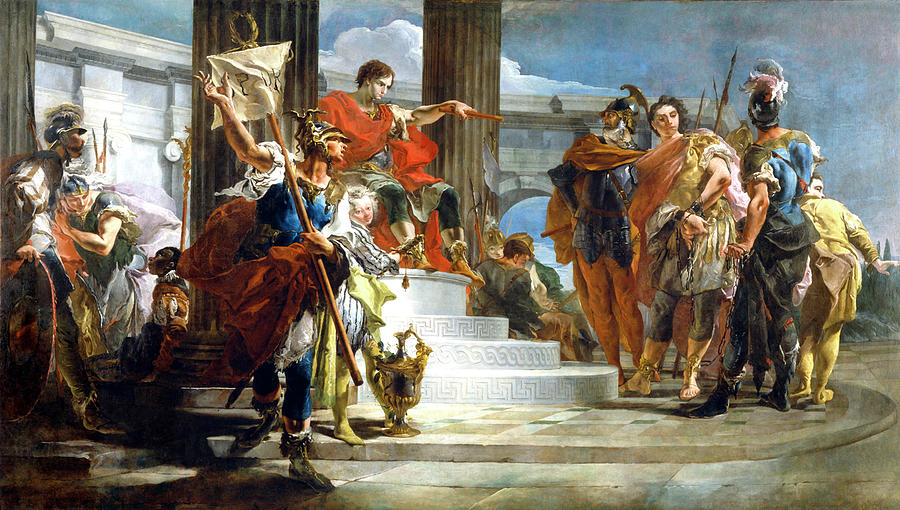
When you’re worldbuilding, creating nations for your world’s inhabitants is likely going to be one of your first priorities. The question is: who’s in charge? Your government will probably depend on the time period, social climate, geography, and other factors. One type of government that is frequently found throughout history in one form or another is the autocracy. Autocracies have been prevalent throughout human history, and in popular fiction we see them in media such as Star Wars, The Hunger Games, or Lord of the Rings. Autocracies take many shapes; this allows them to fit well into almost any campaign.
For those of you who don’t want to waste time with annoying things like details and historical context, there will be a summary at the end to give you the short and sweet of it all.
So, let’s get into it!
What is an autocracy?
An autocracy is a governmental structure where one ruler holds absolute power over their domain. Typically, an autocrat will rely on other officials and/or military might in order to enforce their will upon the general populace. Historically speaking, in order for an autocrat to be successful (and, more importantly, survive) they must be extremely iron-willed, charismatic, and competent. If an autocrat is missing any of these traits, they are very likely to meet an untimely end.
Generally, there have been two types of autocracy: closed and electoral. A closed autocracy is one where the ruling party is the only officially accepted party, and this party is entirely unaccountable to the general populace. On the other hand, an electoral autocracy is one where the autocrat is given power through an elective procedure. While there is more of a democratic aspect in an electoral autocracy than a closed autocracy, the democracy is somewhat of an illusion and the autocrat still maintains absolute power.
Historical precedent
Real-world examples: the Roman Empire, Fascist Italy, the Soviet Union
Autocracies are one of the most common forms of governance throughout human history. There are examples of autocratic rule dating back thousands of years and across the planet. In fact, the concept of one strong-willed person/group commanding absolute power over the rest of the populace may be the oldest type of rulership altogether. As such, there are countless examples of autocracies. Here, we’ll focus on just two of the more well-known and influential autocratic governments in history.

In ancient and classical history, almost every civilization was ruled by an autocracy of some kind. The most (in)famous, however, is arguably the Roman Empire. On paper, power was shared between a senate and an emperor, but in reality absolute power was consolidated in the emperor. Despite holding so much power, the Roman emperors were far from safe. Emperors were frequently assassinated, died in battle, or defeated by another prospective ruler. Even with the frequent change in leadership, the governmental status quo still remained the same for centuries and someone else simply stepped forth to fill the last emperor’s shoes.
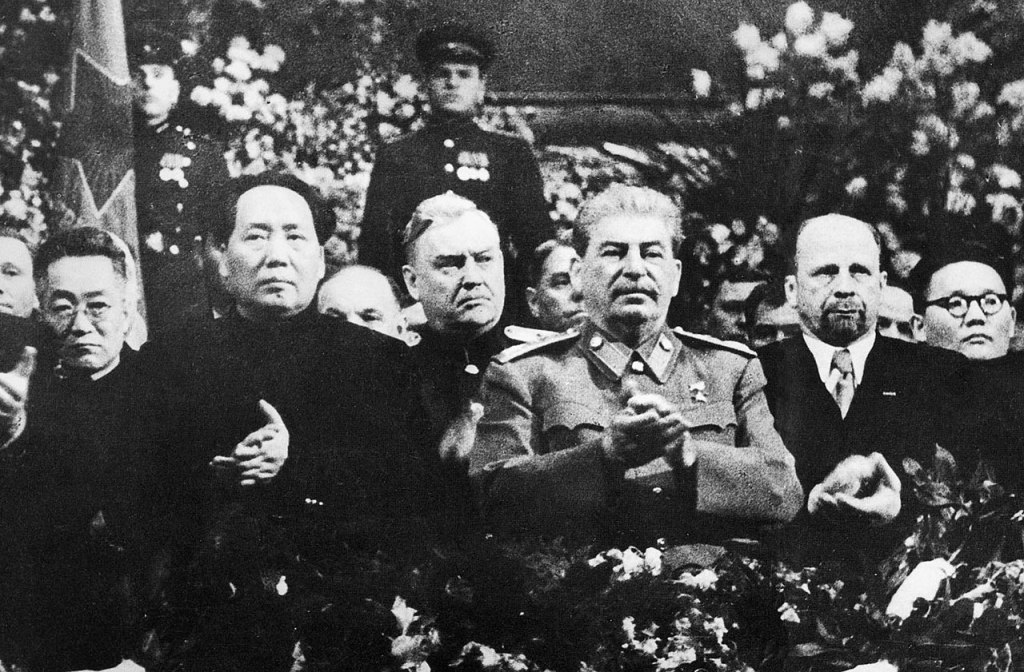
Almost two thousand years later, we have the Stalinist Soviet Union. Formed on the ideals of communism, under Joseph Stalin the rulership quickly turned into a totalitarian regime. Incredibly paranoid, Stalin was notorious for having people quietly killed or sent to work camps in Siberia whenever he began to suspect their behavior did not fully align with his plans. Like other autocratic states of the time (including Fascist Italy and Nazi Germany), surveillance was a key tool of upholding the ruling party. The secret police kept tabs on the general populace and anything that might cause trouble for the ruling party was quickly and efficiently disposed of. Surveillance, propaganda, and fear were key pillars to Stalin’s Soviet Union.
Humans have come a long way over the course of history, but one thing remains the same: there are always people who desire to have absolute control over others. In today’s world, autocracies are considered by many in the West to be less conducive to human rights and fair treatment by the government. Nonetheless, for the majority of human existence rule by autocracy was simply the way things worked.
When might you include an autocracy in your worldbuilding?
Given the far-reaching extent of where and when autocracies have appeared throughout history, this type of government can be integrated into your world fairly easily. To get your creativity gears spinning, here’s a few possibilities for how an autocracy in your world might have come into being:
- A political coup resulted in an insurrection’s leader becoming the new absolute ruler
- A family with unusually strong magical ability has maintained uncontested power over a realm for centuries
- A deity or other super-powerful being has total rulership over their domain, which may include your main world or may be their personal dimensional plane that your party’s characters travel to
Autocracies can be longstanding dynasties that have lasted hundreds of years, new regimes put in place by warlords, or any other scenario you can come up with. It’s your choice to decide how you want to introduce an autocracy to your world and determine the effect it has on both the people under its rule and on the world as a whole.
The effects of an autocracy
In a fantasy world, it is certainly possible for a nation under autocratic rule to be happy and prosperous for all. Realistically, however, this is not usually the case. Most autocratic governments tend to overstep their bounds into the personal lives of the populace in order to ensure complete control. As such, it is important to keep in mind that since most sentient races value free will to some degree, they’re going to push back against their ruler when they have the chance. Add the fact that, in these types of situations, the high-ranking government officials generally have a far better quality of life than the average person, and there’s even more reason for a general populace to harbor resentment of its rulership. Due to this dynamic, when your party or readers are visiting a region under autocratic control they are likely to encounter the following:
- Prominent military presence. Nothing tells the general public “don’t act up” like tough-looking soldiers marching through the streets. Higher-ranking soldiers are often more bought in to the autocrat’s agenda than most, and as such may enforce harsh laws upon the people under their supervision if there is any sign of dissent.
- Propaganda. In order to maintain the image of unquestionable rule, an autocrat will likely make sure that reminders of their authority are found all over their domain. This could include statues of the ruler, monuments to the government’s power, posters with pro-governmental content, or flags and banners with the ruler’s emblem on them.
- Order and efficiency. Because of the direct nature of an autocracy’s rulership, areas under their rule have little place for wasteful activity. The populace may work toward the government’s goals, crime is often severely punished, and the will of the autocrat is enforced through delegated leaders.
A smart autocrat appeases the people just enough to keep them from rioting or starting a revolution, but sometimes autocrats get a little too comfortable in their position of power. Whenever this happens, odds are there is someone waiting in the shadows to move up a rung on the political ladder. An autocrat is always at risk of assassination from friends and enemies alike. Nations ruled by autocracies have a potential to change rulers fairly often if whoever is currently in power isn’t razor-focused at all times (this is especially true of hereditary autocracies, as someone born into rulership tends to have a more entitled view of their role than someone who had to claw the way to the top through a revolution). Because of this, laws may frequently change and acknowledgement of former rulers may be silenced on a whim.
Potential Story Ideas
An autocracy can be the focal point for a story, quest, or even an entire campaign. Here are some possible ways you can involve players or readers in an autocratic government you have created:
- Assassination plot. Someone wants the ruler dead. Is it a high-ranking official who wants to take the throne for themselves? Is it the ruler of a rival nation trying to cause turmoil before an invasion? Or perhaps it is an idealist group of peasants who want to implement a fairer form of governance.
- Assassination aftermath. The ruler has been killed and a power vacuum now stands in their place. Surely, several factions will be vying for rulership over the nation. Depending on the circumstances, the populace may be panicked and chaos may break out in the streets. Or, perhaps the ruler’s second-in-command quickly steps into power and establishes severe laws and punishments to ensure the population stays in check.
- Large-scale war. An autocrat has roused the people to war. Nationalism is high and military activity has ramped up. Much of the nation’s industry and food supply has become geared toward the war, and this affects people across the social strata.
- Revolution. Someone has decided it’s time for a change. In secret gatherings, revolutionaries plan their vision for a new nation according to their design. When the time is right, they leave the shadows for the streets and begin implementing their ideals.
Summary
Type of Government: Ruled by one person or one party, enforcement is delegated to officials and military.
Historical Examples: Roman Empire, Soviet Union, Fascist Italy
Fictional Examples: Galactic Empire (Star Wars), Panem (Hunger Games), Mordor (Lord of the Rings)
Typical Features: Strong and prevalent military, heavy emphasis on propaganda/nationalism, order and control
Autocracies have been commonplace throughout history, and as such it would make sense to include one or many autocracies when developing the political structures and lore of your world. While many autocracies are associated with oppressive government power, there is great potential to create all kinds of autocratic nations, including those that have benevolent will toward the common person. Regardless of how you choose to develop your world’s political climate, autocracies are certainly a great choice for intriguing and engaging dynamics and plot hooks.
Thanks so much for reading, and keep on worldbuilding!
 LegendWright
Leave a comment